
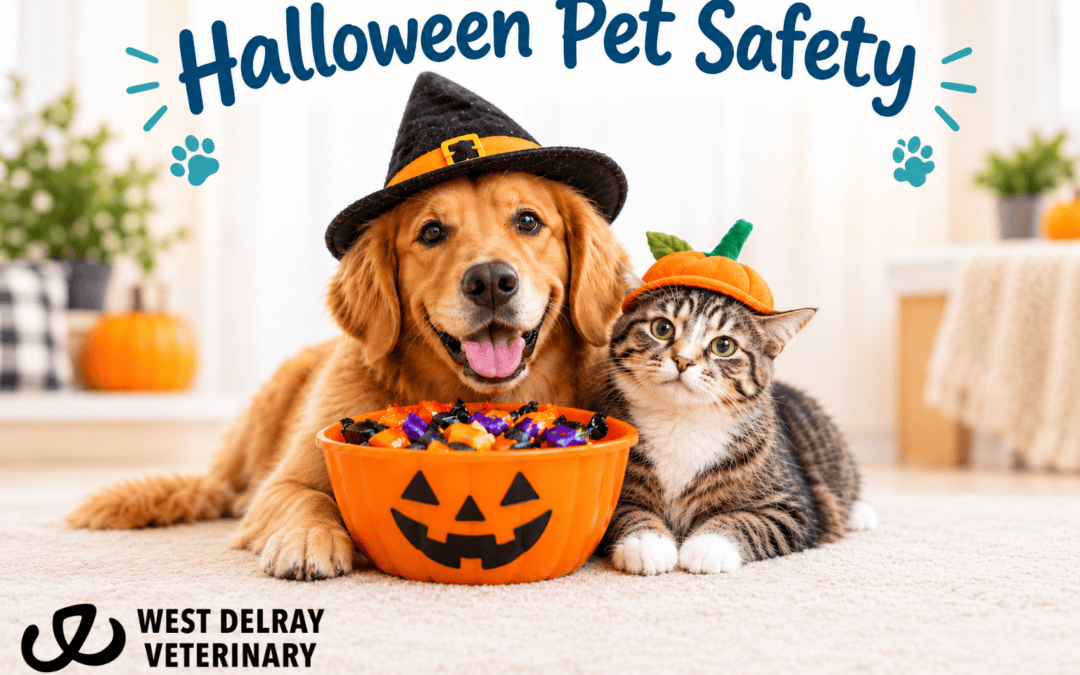
The holiday season is a wonderful time of year, filled with family gatherings, celebrations, delicious food, and cherished traditions. At West Delray Veterinary, we want you and your family to enjoy all the fun and excitement that the holidays bring, while also helping your pets stay as safe, happy, and comfortable as possible.
From Halloween candy and Thanksgiving dinners to Christmas celebrations and holiday visitors, this time of year introduces new experiences, foods, and changes in routine that can sometimes create unexpected challenges for our pets.
As part of our comprehensive, integrative approach to veterinary medicine, we believe that thoughtful preparation and preventive care are among the most effective ways to protect your pet’s health.
Here are some simple, practical ways to help your furry family members enjoy a safe and healthy holiday season.
1. Keep Your Pet’s Diet Consistent Throughout the Holidays
One of the most important recommendations we make to pet owners during the holidays is also one of the simplest: Stick with the foods and treats your pet already knows and tolerates well.
Although sharing special holiday foods with our pets may feel like an expression of love, introducing unfamiliar ingredients, rich foods, or excessive treats can disrupt their digestive systems.
In fact, at veterinary hospitals, we commonly see an increase in gastrointestinal problems during the holiday season, including:
- Vomiting and diarrhea
- Gastroenteritis and dietary indiscretion
- Pancreatitis, particularly following consumption of fatty foods
- Abdominal discomfort and loss of appetite
- Intestinal obstructions from bones, food packaging, or other foreign materials
Even foods that are not inherently toxic can cause problems when introduced suddenly or consumed in excessive quantities.
Our recommendation: Maintain your pet’s regular diet and feeding schedule as consistently as possible. If you want to include your pet in the celebration, offer a small portion of a familiar, veterinarian-approved treat rather than experimenting with something new.
Remember that several family members offering just a few extra treats can quickly add up to a significant dietary change.
2. Halloween: Keep Candy and Chocolate Away From Pets
Halloween is particularly exciting for families, but candy bowls and trick-or-treat bags can create serious hazards for curious dogs and cats.
Some of the most important concerns include:
- Chocolate: Contains theobromine and caffeine, which can cause vomiting, agitation, abnormal heart rhythms, tremors, and seizures.
- Xylitol (birch sugar): A sweetener found in some sugar-free candies, gum, and other products that can cause life-threatening hypoglycemia and liver injury in dogs.
- Raisins and grapes: Can cause acute kidney injury in dogs.
- Candy wrappers: May create choking hazards or gastrointestinal obstructions.
- Excessive sugary or fatty treats: Can cause significant gastrointestinal upset even when the ingredients themselves are not toxic.
Keep Halloween candy in secure locations that pets cannot access, and remind children and visitors not to share their treats with animals.
If your pet ingests chocolate, xylitol, grapes, raisins, or another potentially toxic substance, contact your veterinarian or an animal poison-control service immediately rather than waiting for symptoms.
3. Thanksgiving and Christmas: Think Twice Before Sharing the Feast
Thanksgiving and Christmas are wonderful opportunities to gather around the table, but many traditional holiday foods are inappropriate for our pets.
Rich gravies, turkey skin, buttery side dishes, fatty meats, and unfamiliar leftovers can trigger gastrointestinal inflammation and, in some cases, pancreatitis.
Other common holiday hazards include:
- Cooked turkey, chicken, and other bones that may splinter or cause gastrointestinal injury
- Onions, garlic, and related ingredients that can damage red blood cells
- Grapes and raisins found in desserts or stuffing
- Alcohol and desserts containing chocolate or xylitol
- High-fat foods that may contribute to pancreatitis
At West Delray Veterinary, we encourage families to resist the temptation to make too many exceptions to their pets’ normal diets during holiday celebrations.
A special occasion for your family doesn’t have to mean a special meal for your pet.
Instead, consider offering a favorite familiar treat, a little extra playtime, or a relaxing walk together. These simple gestures can be equally meaningful without introducing unnecessary medical risks.
For pets with food sensitivities, inflammatory bowel disease, a history of pancreatitis, or prescription dietary needs, maintaining nutritional consistency is especially important.
4. Create a Comfortable Environment for Holiday Visitors and Celebrations
Food isn’t the only consideration during the holidays. Visitors, decorations, costumes, loud noises, and changes in household routines can be stressful for some pets.
While some dogs and cats enjoy the excitement, others may become anxious, withdrawn, or overwhelmed.
A few thoughtful preparations can make a meaningful difference:
- Provide a quiet, comfortable retreat away from guests and activity.
- Maintain familiar feeding, walking, and sleeping schedules.
- Make sure pets have access to fresh water and their usual resting areas.
- Use secure doors or barriers to prevent pets from escaping when guests arrive.
- Avoid forcing pets to wear costumes or interact with unfamiliar visitors.
- Keep identification tags and microchip information current.
For pets with known anxiety or noise sensitivities, speak with your veterinarian before the holidays.
Our integrative approach may incorporate environmental modifications, behavioral strategies, calming supplements when appropriate, and conventional medications when needed.
The goal is to develop an individualized plan that supports your pet’s emotional and physical well-being.
5. Be Mindful of Holiday Decorations and Household Hazards
Holiday decorations create a festive atmosphere, but they can also introduce risks.
Christmas tree ornaments, ribbons, tinsel, electrical cords, candles, and certain decorative plants can be dangerous when chewed or swallowed.
Cats are particularly attracted to ribbons and string-like decorations, which can cause serious intestinal obstructions.
Secure Christmas trees, keep fragile ornaments out of reach, supervise pets around decorations, and avoid leaving candles unattended.
Certain holiday plants, including holly and mistletoe, may cause illness if ingested. Lilies are especially dangerous to cats and can cause life-threatening kidney injury.
Be mindful of gifts containing food, chocolate, medications, or other potentially harmful products placed beneath the tree.
A little preparation can prevent an unexpected emergency.
6. Plan Ahead Instead of Reacting to Problems
At West Delray Veterinary, we believe that prevention is one of the most valuable aspects of high-quality veterinary medicine.
Rather than waiting for a problem to develop, we encourage pet owners to reach out proactively with questions about nutrition, anxiety, travel, medications, or other holiday concerns.
Our comprehensive, integrative approach considers each patient’s individual health history, nutritional needs, lifestyle, and emotional well-being.
Whether your pet needs dietary guidance, a plan for managing holiday anxiety, or advice about traveling safely, our veterinary team is here to help.
If your pet develops persistent vomiting, diarrhea, abdominal discomfort, or unusual behavior, seek veterinary guidance promptly. Suspected toxin ingestion, repeated vomiting, marked lethargy, abdominal distension, or difficulty breathing may require immediate emergency attention.
Frequently Asked Questions About Holiday Pet Safety
What holiday foods should dogs and cats avoid?
Avoid chocolate, xylitol, grapes, raisins, onions, garlic, alcohol, cooked bones, and excessively fatty foods. Even non-toxic foods can cause digestive upset when introduced suddenly or offered in large amounts.
Why do veterinarians see more gastrointestinal problems during the holidays?
Holiday celebrations often involve increased access to table scraps, rich foods, unfamiliar treats, and accidental food ingestion. These dietary changes can contribute to vomiting, diarrhea, gastroenteritis, and pancreatitis.
Can I give my dog turkey on Thanksgiving?
A small amount of plain, thoroughly cooked, boneless, skinless turkey may be appropriate for some healthy dogs. However, if turkey is not already part of your dog’s diet, we generally recommend avoiding unnecessary dietary changes during the holidays. Never offer cooked bones, fatty skin, gravy, or seasoned preparations.
How can I help my anxious pet during holiday gatherings?
Maintain familiar routines, provide a quiet retreat, and avoid forcing interactions with visitors. For pets with significant anxiety, consult your veterinarian in advance about individualized behavioral and medical support.
What should I do if my pet eats chocolate or another toxic holiday food?
Contact your veterinarian, an emergency veterinary hospital, or an animal poison-control service immediately. Do not wait for symptoms or induce vomiting unless instructed by a veterinary professional.
ASPCA Animal Poison Control: (888) 426-4435
Pet Poison Helpline: (855) 764-7661
Consultation fees may apply.
A Happy, Healthy Holiday Season Starts With Mindful Choices
At West Delray Veterinary, we believe that keeping pets healthy means looking at the whole patient, including nutrition, preventive medicine, physical comfort, emotional well-being, and the environment they share with their families.
Our goal is to help you make informed, thoughtful decisions that support your pet’s health throughout every season of life.
As you celebrate the holidays, remember that your pets don’t need elaborate meals, unfamiliar treats, or special indulgences to feel included. Often, the greatest gifts we can offer are consistency, comfort, attention, and a little extra time together.
From all of us at West Delray Veterinary, we wish you and your furry family members a wonderful, happy, and healthy holiday season!
We’re Here to Help You Prepare
Have questions about holiday nutrition, anxiety, travel, or your pet’s overall wellness? Our team would be happy to help you develop an individualized plan before the celebrations begin.
West Delray Veterinary
15065 S. State Rd 7, Suite # 750
Delray Beach, FL 33446
Call or text: (561) 777-7173
Contact us: Schedule or request guidance
Whether you’re an established client or looking for a thoughtful, comprehensive approach to veterinary care in Lake Worth, Wellington, or the surrounding South Florida communities, we welcome the opportunity to help keep your pets healthy and comfortable throughout the holidays and beyond.